
Flu Vaccination
An Overlooked Risk Management Tool for Heart Health in the Workplace
Flu vaccination is often positioned as a wellbeing activity, but the clinical evidence suggests something more significant. It is a practical component of cardiovascular risk management within the workplace, particularly in organisations already monitoring workforce health and identifying underlying risk factors.
When an exposure is predictable and the consequences are measurable, the response should be deliberate.
Insights from the 2025 Umbrella Wellbeing Report
$1,319
the costs of absences in 2024 per employee
6 days
estimated productivity day loss per employee per month
$46.6B
estimated annual total cost for employers nationwide
Setting the Context: Flu Is a Workforce Risk, Not Just a Seasonal Admin Task
In 2024, New Zealand workers averaged 6.7 sick days each, the highest level ever recorded. That resulted in nearly 13 million lost working days and a national absence cost of $4.17 billion, up from $2.86 billion in 2022. These findings were published in the Southern Cross Workplace Wellness Report 2025 and widely reported by RNZ and HRD New Zealand.
Several factors are likely contributing to this increase. Some of the clearest drivers include the July 2021 change that doubled statutory sick leave entitlements from 5 to 10 days, a cultural shift encouraging staff not to work while ill, the continued circulation of COVID-19, and employees taking more sick leave to care for dependents.
Manual workers averaged 7.5 days off. Non‑manual workers averaged 5.9 days. The cost per employee reached $1,319. Non‑work‑related illness has been the leading cause of absence in New Zealand for at least 13 years, with nine in ten employers encouraging staff to stay home when unwell.
For large organisations operating across multiple locations, those numbers are more than statistics. They represent operational strain, workflow disruption, increased safety pressure, and financial exposure. Absence at this scale affects teams, leaders, and customers.
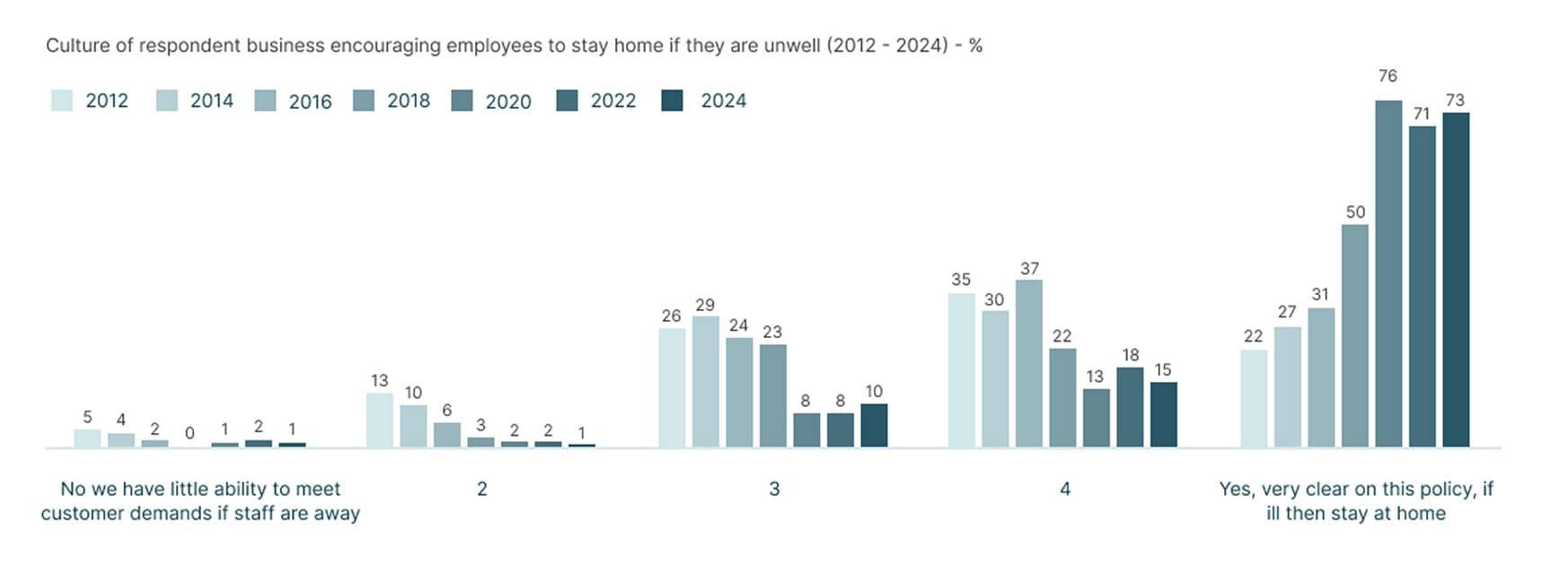
Image source: southerncross.co.nz

The Link Between Flu, Heart Attacks and Strokes
Flu is not simply a respiratory illness.
Research summarised by the Public Health Communication Centre shows that influenza infection can increase the risk of heart attack and stroke by up to six-fold in the days following infection.
The Public Health Communication Centre outlines this clearly in its briefing, Influenza vaccination: One of our most effective ways to prevent heart attacks and strokes.
Influenza places a temporary but significant stress on the cardiovascular system. For individuals with existing cardiovascular disease or undiagnosed risk factors, this short‑term increase in inflammation and cardiovascular strain can trigger serious events.
Researchers believe several biological mechanisms contribute:
- Influenza triggers systemic inflammation
- Blood clotting risk increases
- Cardiovascular stress intensifies
- Unstable plaque in arteries becomes more likely to rupture
1/3
The PHCC also reports that the flu vaccination reduces the risk of major cardiovascular events by around one third in high-risk individuals as detailed in their media release on flu vaccination and heart attack risk reduction.
For organisations with existing health monitoring programmes, this evidence has immediate relevance. Cardiovascular risk is measurable. Infection exposure is seasonal and predictable.
30%
Heart disease and stroke remain leading causes of death in New Zealand, reinforced by national cardiovascular data published by the Heart Foundation of New Zealand.
For employers already collecting health data or offering cardiovascular screening, this connection is not abstract. It sits directly within the scope of workforce risk.
Flu Vaccination as Part of a Broader Risk Strategy
Flu vaccination reduces flu severity and hospitalisation rates while also lowering the risk of secondary cardiac complications. In certain high‑risk populations, its protective effect has been shown to be comparable to some cardiovascular medications.
For workers with known cardiovascular vulnerabilities, flu vaccination should be viewed as part of a broader prevention strategy.
Governance and Workplace Risk
From a governance perspective, this approach aligns closely with director and officer responsibilities to actively oversee health and safety risk. The Institute of Directors’ Health and Safety Governance: A Good Practice Guide encourages organisations to move beyond reactive reporting and focus on understanding critical risks before harm occurs.
Seasonal flu peaks occur every year. Cardiovascular risk is well documented. Integrating vaccination into your existing health strategy is a practical and evidence‑based response.
A Proactive, Evidence-Based Response
FLU VACCINATIONS

Supporting Workforce Health Across Multiple Sites
Protecting your workforce before
winter does not need to be complicated.
LifeCare works with large organisations to deliver workplace flu vaccination programmes nationally, coordinating across multiple sites and providing reporting that gives senior leaders clear visibility. Programmes can be scheduled ahead of winter, aligned with broader health initiatives, and delivered in ways that support remote locations and shift-based teams, ensuring consistent access across the workforce.
LifeCare manages logistics, bookings and delivery, making the process efficient and easy to implement across organisations of varying sizes. Our flu voucher system is designed to be flexible, simple, and aligned with how your business operates. Vouchers can be redeemed at more than 400 pharmacies and medical centres across New Zealand, giving employees convenient nationwide access to vaccination services.
Opt 1: Order Through Our Customer Portal
This option suits businesses that prefer to manage orders centrally.
Simply:
- Log in to the LifeCare Customer Portal using your email and password
- Select the number of flu vouchers required
- Pay securely by credit card or provide a purchase order number to charge to your account
Once your order is complete, vouchers are emailed directly to you, or to individual employees if their email addresses are included at the time of ordering. If the vouchers are sent to you, they can be easily distributed to your team digitally or printed if required.
This approach keeps everything in one place and gives you clear oversight of uptake across your organisation.
Opt 2: Let A Customised Ordering Link
This option is ideal for organisations looking to reduce internal administration and provide employees with a simple self-service process.
The process is simple:
- Contact your Account Manager or complete our online enquiry form and we will contact you directly
- We create a tailored form specific to your organisation
- You distribute the link directly to your employees
- Employees complete the form and order their vouchers
- Vouchers are sent directly to them via email
The form can include a drop-down list of your sites or locations, making it easy to manage orders across multiple teams. This option works particularly well for larger or multi-site businesses. Your organisation is invoiced monthly based on vouchers ordered, using an agreed purchase order number.
From Vaccination to Emergency Capability
Reducing flu exposure lowers short term cardiac vulnerability, particularly among higher risk workers.
Influenza infection can increase cardiac stress in the weeks following illness, and vaccination helps reduce that pressure while supporting business continuity during winter. At the same time, no workplace can remove the risk of a medical emergency entirely, which means prevention and preparedness must work together. Under the Health and Safety at Work Act and associated regulations, employers are required to provide appropriate first aid facilities, equipment, emergency procedures and access to trained first aiders.
The Australian and New Zealand Committee on Resuscitation explains in Guideline 7 – Automated External Defibrillation in Basic Life Support that for every minute defibrillation is delayed, survival decreases by approximately 10 percent. Timely CPR and access to an automated external defibrillator are therefore critical components of an effective emergency response plan.
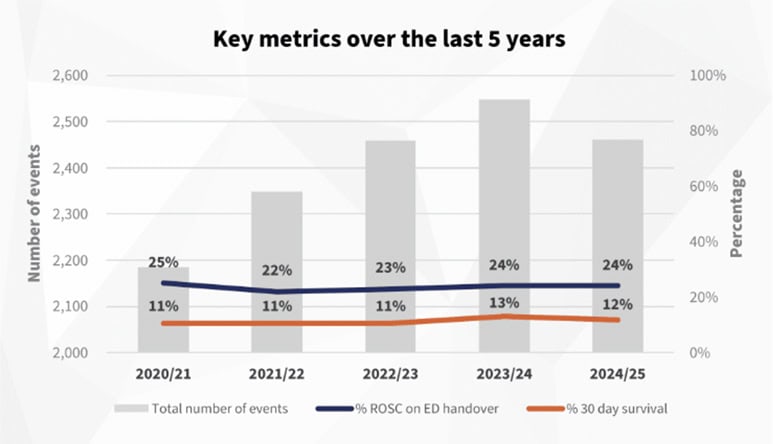
ROSC = Return of Spontaneous Circulation (it refers to the moment a person's heart starts beating on its own again after a cardiac arrest).
Recent national reporting continues to reinforce the importance of early intervention in cardiac emergencies. A February 2026 article from RNZ, drawing on the latest out-of-hospital cardiac arrest data from emergency response agencies reported that only 24 percent of people survive to hospital arrival, and just 12 percent are alive one month later, as outlined in Only a quarter of cardiac arrest patients survive the trip to hospital – RNZ.
However, survival rates are significantly higher in situations where cardiac arrest is witnessed and early defibrillation is delivered. The Wellington Free Ambulance Out-of-Hospital Cardiac Arrest Registry 2023/24 Summary Report shows that in the internationally recognised Utstein comparator group, which includes adults with a witnessed arrest and a shockable rhythm where resuscitation was attempted, survival to 30 days reached 38 percent.
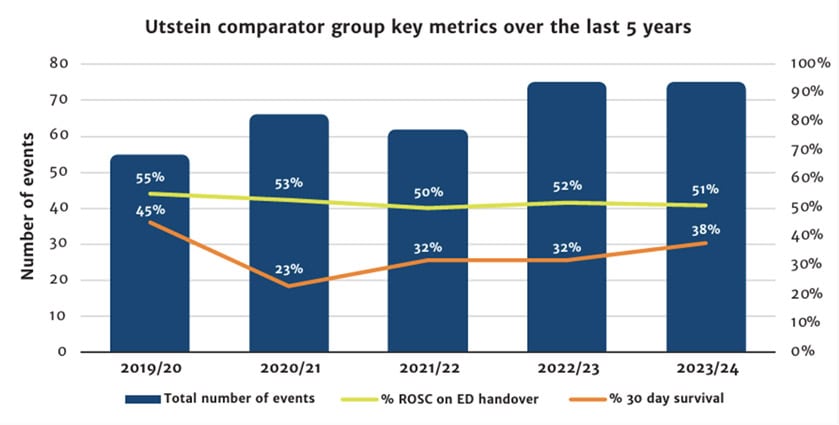
Graphic taken from Out-of-Hospital Cardiac Arrest Registry 2023/24 by Wellington Free Ambulance
For employers, this reinforces a clear principle. Flu vaccination reduces preventable cardiac stress during winter, while visible AED placement and regular CPR training ensure that if an event does occur, the workplace response is immediate, structured, and effective.
In a cardiac emergency, response time matters. Teams who are trained, confident and familiar with their equipment are more likely to act without hesitation, which can directly influence outcomes.
Building Organisational Capability Across Sites
Alongside prevention, emergency readiness remains an important part of workforce resilience.
LifeCare delivers practical training programmes including Foundation First Aid, Basic First Aid and Heart Start training. These sessions focus on practical hands-on capability that reflects the realities of your work environment, helping teams build confidence responding to emergencies when it matters most.
In partnership with Pact Packaging Henderson, structured first aid drills were delivered in realistic operational conditions on a working factory floor. Participants practised responding to stroke and heart attack scenarios within their normal operational setting, strengthening communication, role clarity, and situational awareness.
This kind of preparation does more than meet regulatory expectations. It builds calm, capable teams who can respond quickly and effectively under pressure while supporting operational continuity when critical moments occur.
“We’re incredibly proud of our first aiders for their engagement and commitment, and a big thank you to Life Care for delivering a practical, impactful session. The energy, teamwork, and learning captured on the day are a strong example of Pact’s commitment to keeping our people safe.”
Pact Packaging – Henderson

Continuing the Conversation
Flu vaccination, cardiovascular risk identification, and emergency response training are not separate conversations. Together, they contribute to a more resilient, prepared and supported workforce.
Through Flu Vaccination programmes, LifeCare helps organisations reduce preventable illness and short‑term cardiac strain during peak season. Through Health Monitoring, we support early identification of underlying risk factors. And through practical emergency response training we help your teams build confidence responding when urgent situations arise.
When these elements work together, prevention and preparedness become part of your operational strength rather than a seasonal response.
For Existing Clients
If you are already working with LifeCare, whether through training, health monitoring or flu vaccination programmes, we encourage you to explore how these services can work together as part of a more connected approach to workforce health, preparedness and resilience. Contact us today.