workplace injury prevention
One Injury or Illness Can Cost More Than Prevention to SMEs
For small and medium businesses, losing one experienced worker to an injury or illness can disrupt the whole team. Some health and capability risks can be identified before a person starts, allowing the employer to consider appropriate controls, accommodations or further assessment.
When the cost of getting it wrong falls on a small team, prevention is not a nice-to-have. It is the practical, lower-cost option.

Understanding the Impact of Workplace Injuries
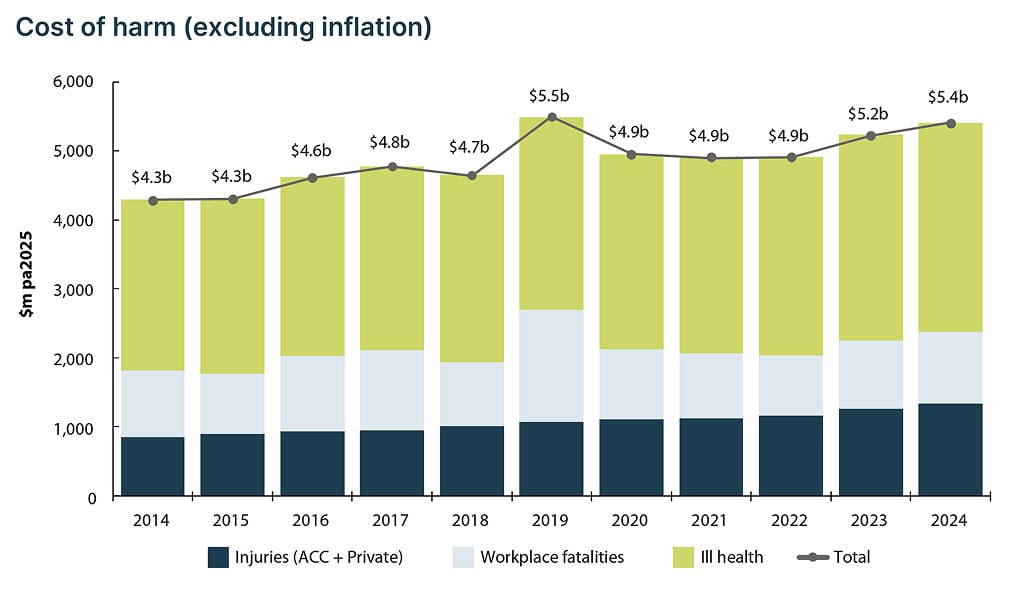
$5.4B
Total cost of workplace injuries, illnesses and fatalities in NZ in 2024
209,400
Work-related injury claims in New Zealand in 2024
$1.34B
Serious injury ACC costs and lost income to individuals in 2024
Source: Business Leaders’ Health and Safety Forum, State of a Thriving Nation 2025 | Stats NZ Injury Statistics: Work-Related Claims 2024
The Real Cost of Workplace Injuries and Illnesses
For a small or medium business, one injury or illness can hit harder than people expect.
If a forklift operator, machine operator, or tradesperson is unable to work, the impact is usually felt straight away, not weeks later.
Common flow-on effects include:
- Lost productivity while the role sits vacant
- Overtime costs for remaining staff covering the gap
- The expense and disruption of bringing in temporary staff
- Delays to jobs, deliveries, or client commitments
- ACC claim costs and the time spent managing the claim
According to Stats NZ, 209,400 work-related injury claims were made across New Zealand in 2024. Labourers, technicians, trades workers, and community and personal service workers remain among the most affected groups, which reflects the kind of physically demanding roles common in many SMBs.
On top of injuries, illness adds to the picture. Non-work-related illness has been the leading cause of staff absence in New Zealand for over a decade. A pre-employment assessment may identify disclosed health conditions, symptoms or abnormal screening results that are relevant to the proposed work and may require further assessment or workplace controls.
Figure 1: The harm of workplace injuries, illness and fatalities was $5.4b in 2024, and has trended higher over the last decade

Are You Hiring the Right Person for the Physical Demands of the Job?
Physical jobs require physical capability. That sounds obvious, but it is often assumed rather than checked.
A Pre-Employment Medical helps identify relevant health history, symptoms, or screening findings that may require further assessment before someone starts; factors that may not come up during an interview but could present a real risk in a physically demanding role. Depending on the job, the assessment may include health screenings such as lung function, hearing, vision, blood pressure, and other relevant tests. These results also establish a valuable baseline for future health monitoring, allowing employers to track any work-related changes in an employee’s health throughout their employment.
Preventing an injury or health issue before it happens is almost always simpler and cheaper than managing one after an incident.
Supporting safer hiring decisions with a Functional Capacity Assessment provides objective information about the candidate’s demonstrated physical capability during the assessment, which can be compared with the demands of the role.
When Should You Use a Pre-Employment Medical or a DL9 Driver Medical?
Many small business owners are not sure when each assessment applies, or assume they only matter for large companies.
A DL9 Driver Medical is a legally required medical certificate for anyone holding certain heavy vehicle licences or specialist driving endorsements, distinct from a Pre-Employment Medical, which applies more broadly to any physically demanding or safety-critical role.
Pre-Employment Medicals
Pre-Employment Medicals are appropriate for any role with physical demands or safety considerations. They review a candidate’s health history and identify, through health screenings, anything that could affect their ability to do the job safely.
DL9 Driver Medicals
DL9 Driver Medicals are required for heavy vehicle licence classes 2 to 5 and for specialist endorsements. If your business employs drivers in these categories, the medical examination assesses whether the individual meets the applicable NZTA medical fitness standards at the time of assessment.
Roles where these assessments are commonly used include:
- Drivers holding or applying for heavy vehicle licences and endorsements
- Machine operators
- Construction workers
- Manufacturing staff

A Simple Way to Reduce Risk Before Someone Starts Work
Prevention is usually simpler, less disruptive, and less expensive than managing an injury or illness after it occurs. A pre-employment assessment helps identify potential risks before they become a problem, protecting both your people and your bottom line.
For a small team, this matters even more. There is less room to absorb the impact of an injury, and often less internal capacity to manage a complex ACC claim or a long absence. A short assessment process upfront can save weeks of disruption later.
Pre-Employment Health Assessment Checklist
To make this easier, we have put together a practical checklist you can use when hiring for physically demanding or safety-critical roles.
The checklist walks through what to consider before you recruit, during the hiring process, what to assess, and what to keep in mind once someone has started in the role. It is designed to be a practical reference, not a compliance document.

How LifeCare Can Help
LifeCare works with businesses across New Zealand to deliver workplace health assessments that are practical, role-specific, and clinically sound.

Pre-Employment Medicals
Pre-Employment Medicals assess relevant health information and screening findings in relation to the identified demands and risks of the proposed role. Our practitioners review medical history, flag relevant health factors, and give you clear, practical reporting to help you make a confident hiring decision.

Functional Capacity Assessments
Functional Capacity Assessments check whether a candidate can physically do the job. Lifting, carrying, posture, range of movement, all assessed in a structured way providing objective information to support role-placement and risk-management decisions.

DL9 Driver Medicals
DL9 Driver Medicals are required for heavy vehicle licences and endorsements. We make it straightforward to get drivers assessed and keep your fleet on the road safely and compliantly.
Taking a Practical Step Before Your Next Hire
Health and safety leadership for a small business does not need to be complicated. It is about taking simple, practical steps before problems occur, rather than managing the cost and disruption afterwards.
Through Pre-Employment Medicals and Functional Capacity Assessments, we help you make confident hiring decisions for physically demanding roles. Through DL9 Driver Medicals, we support drivers holding heavy vehicle licences and endorsements to stay medically fit for the road.
If you would like to talk through your next hire or set up a simple pre-employment process for your business, speak with your Account Manager, email us, or get in touch below.
“The feedback from our staff was that the occupational health nurse was extremely thorough and the detail of the assessments was excellent. They received a lot better information and feedback than they have in the past. Overall, a top effort.”
Wayne Love, Operations/Health and Safety, GN Brewer