15/07/2025
How Much Is a First Aid Course in New Zealand?
Whether you're at work, in a classroom, or at home, knowing how to respond in a medical emergency can save…

Between 2021 and 2025, LifeCare completed approximately 15,000 workplace health assessments at 202 primary industries worksites across New Zealand. Over those five years, overall workforce wellness fell from 81.7% to 75.9%, and we’ve brought the results together in our Primary Industries Workforce Intelligence Report 2026. Here’s what we found, what it means across forestry, agriculture, horticulture and fisheries, and how you can compare these results with your own team.
Much of this work involves operating heavy machinery, working in remote locations, handling livestock, harvesting crops and processing food, often in physically demanding conditions where tasks are safety critical. Workforce capability is fundamental to operational performance in these settings, and regular health monitoring shows whether that capability is being maintained over time.
The report draws on LifeCare’s own health check data from the workers its teams assess every day across many organisations, so it works as an industry benchmark rather than a record of any single employer’s results. It focuses on four areas, which are overall workforce wellness, hearing, vision and metabolic health, whether each is improving, holding steady or declining, and how employers can compare their own workforce against the sector.
LifeCare helps organisations across New Zealand improve employee wellbeing and business performance through expert occupational health services and actionable workforce insights that identify trends and guide targeted interventions. Contact our team to discover how we can support your organisation’s wellbeing goals.
Each is covered in the sections below:
The report analyses anonymised results from workplace health assessments LifeCare collected between 2021 and 2025. It covers primary industries worksites only, so the findings describe forestry, agriculture, horticulture and fisheries rather than the New Zealand workforce as a whole.
Repeating the same checks each year for five years shows the direction each measure is travelling, and whether the controls already in place are bringing risk down. Across the measures in the report’s Primary Industries Workforce Snapshot, the results are as follows.
| Measure | Finding |
|---|---|
| Overall workforce wellness | Down from 81.7% in 2021 to 75.9% in 2025 |
| Overall health screening participation | Up 19% since 2021 |
| Possible noise-induced hearing loss | Approximately 18 to 22%, persistent across five years |
| Employees outside the healthy BMI range | Approximately 80%, persistent |
| Workers outside the normal cholesterol range | 32 to 41%, persistent |
| Near vision referrals | Up from 8.8% to 25.7%, almost tripling in two years |
| Blood pressure within the normal range | Down from 93.2% to 83.8% |
These findings sit within a wider national picture of physically hazardous work. WorkSafe reports that agriculture accounts for around a quarter of serious acute harm in Aotearoa New Zealand while making up around 5% of employment, and that the fatality rate in forestry is about 15 times higher than the average for all industries, with being hit by a tree or log the most common cause of fatal incidents. Those figures reflect the hazards of the work itself, and the health findings in this report add a further layer of insight on top of them, showing how the health of the workforce exposed to those hazards is tracking over time.
Overall workforce wellness has slipped from 81.7% in 2021 to 75.9% in 2025, while the report records overall health screening participation up 19% since 2021. Several indicators have remained unchanged and others have deteriorated, which the report reads as a broader shift in workforce capability rather than a series of isolated health issues.
The report treats this as more than a health statistic. For organisations operating in safety-critical environments, declining wellness is a leading indicator of operational risk, absenteeism, ACC exposure, productivity loss and workforce sustainability, and it points to a workforce that may be becoming progressively less resilient to the physical demands of the job.
Rising participation gives the sector a strong foundation to build from. The monitoring is already happening, and the information is already being gathered, so the opportunity now is to move beyond compliance and use workforce health data to prioritise preventative action.
The Wellness Score provides an overall view of workforce health based on the combined results of individual employee health monitoring.
Each health monitoring result is categorised according to its outcome, for example within the normal range, outside the normal range, showing signs of deterioration, or safety critical. These results are then combined using a standard formula to calculate the organisation’s overall Wellness Score.
If every employee’s health monitoring results were within the normal range, the organisation would achieve a Wellness Score of 100%. The score reduces as the number and severity of results outside the normal range increase.
This provides businesses with a simple, high-level measure of workforce health and helps identify where further attention or action may be required.
Approximately one in five workers, between 18 and 22%, continue to show possible noise-induced hearing loss, and that figure has remained consistently high across five years. In 2025, a new category of ‘Other Hearing Loss‘ also emerged, affecting more than 5% of workers assessed.
A persistent trend indicates that existing controls may not be delivering the expected long-term outcomes, and the report suggests leaders consider four questions.
For organisations operating machinery, chainsaws, harvesters, tractors, forklifts or processing equipment, hearing loss affects more than communication. It can reduce hazard awareness, situational awareness and emergency response, with consequences for team communication and overall workplace safety. WorkSafe advises that exposure to hazardous noise can cause permanent hearing loss, and that hearing loss is preventable where noise control measures are in place.
Hearing is tested by audiometry to the Approved Code of Practice for the Management of Noise in the Workplace, a check that takes around ten minutes and needs a reasonably quiet environment, which is why LifeCare’s mobile clinics are fitted with sound booths. Noise exposure trend analysis and site-by-site reporting then show whether hearing outcomes are improving at each location over time.
Near vision referrals rose from 8.8% to 25.7%, almost tripling in two years. This makes near-vision decline one of the fastest-changing indicators identified across the dataset.
Declining vision is not simply a personal health issue. Within primary industries it becomes an operational risk, because employees rely on good vision for machinery operation, reading instrumentation, chemical handling, equipment maintenance, quality control and vehicle operation. Vision can decline and increase risk long before employees recognise the issue themselves, and the report suggests leaders consider four questions.
LifeCare’s vision screening includes near and far acuity (short and long-sightedness), stereopsis (depth perception), colour vision, night vision and peripheral vision. The acuity result is compared against the NZ Transport Agency criteria for the applicable licence type, and consideration is also given to the requirements of the employee’s role, with fitness for work assessments, pre-employment medicals and periodic health reviews helping to confirm employees continue to meet those requirements.
Poor metabolic health is a state in which the body struggles to efficiently convert food into energy and is typically identified when people have difficulty with one or more of the following: blood sugar, blood pressure, triglycerides, HDL cholesterol and waist circumference. Approximately 80% of workers assessed sit outside the healthy Body Mass Index (BMI) range, and between 32 and 41% sit outside the normal cholesterol range. The report describes both results as remarkably consistent over five years. Over the same period, the proportion of workers with blood pressure within the normal range fell from 93.2% to 83.8%.
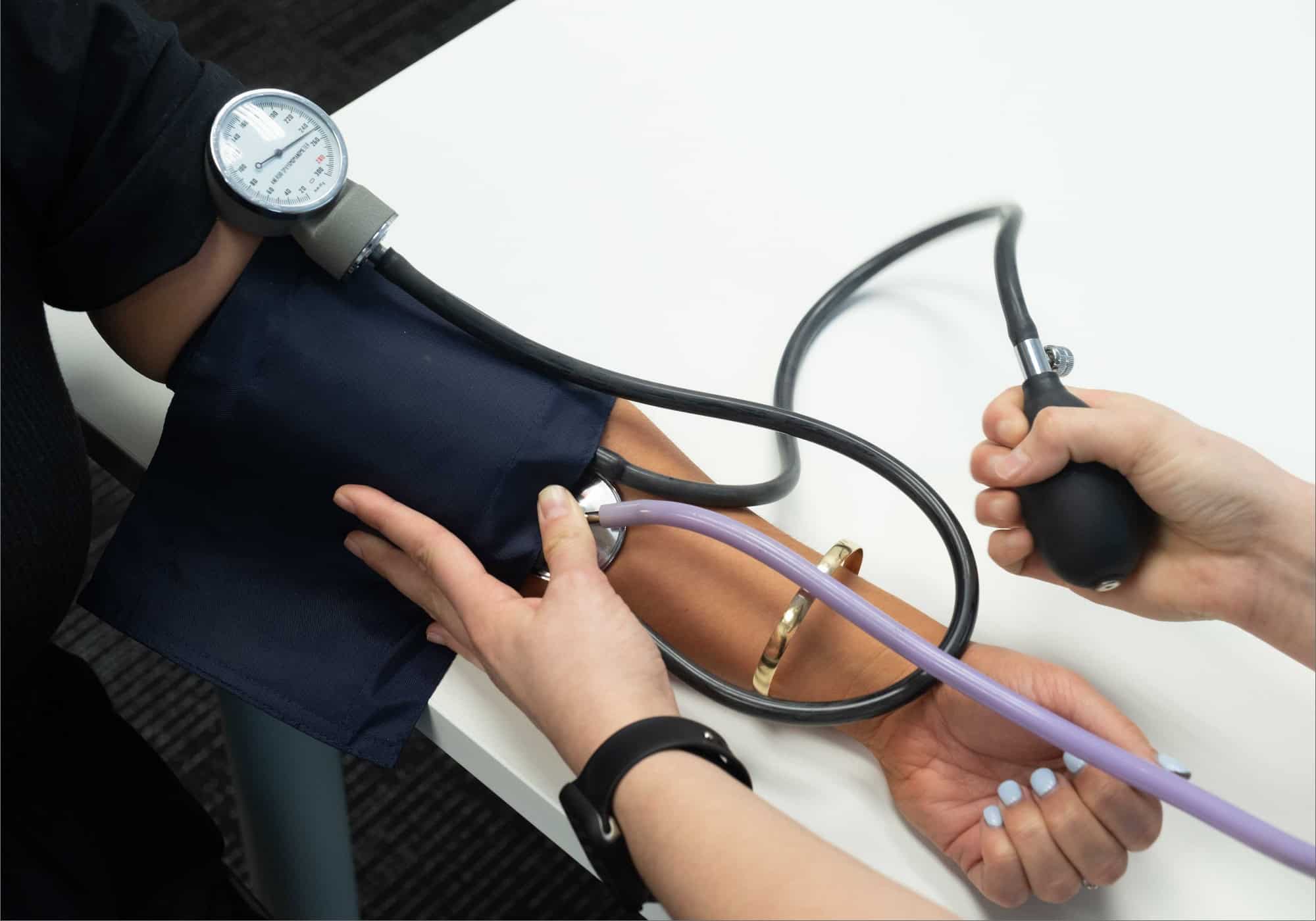
BMI is calculated using weight and height measurements, and LifeCare uses it as an assessment tool for identifying risk factors for heart disease and other health-related problems. Cholesterol and blood glucose are checked with a small finger prick and do not require fasting, while blood pressure results are broadly compared against NZ Primary Care and World Health Organisation recommendations.
Metabolic health influences injury recovery, physical endurance, cardiovascular health, fatigue and long-term absenteeism. The report’s view is that these findings represent an opportunity for preventative health initiatives rather than reactive interventions, such as corporate health checks, cardiovascular screening, lifestyle education, wellbeing initiatives and flu vaccination programmes.
The report identifies psychological wellbeing as the missing metric in the dataset. It remains under-measured across primary industries despite well-known sector challenges, including remote work, isolation, seasonal pressure, long working hours, labour shortages and financial uncertainty. Without proactive measurement and education, organisations may only become aware of issues once they affect performance or retention, which raises an important question for leaders. Is psychological wellbeing being measured anywhere across our sites today, and how early would we know if pressure was building within a team?
Industry organisations already recognise these pressures. Safetree provides health and wellbeing information for forestry businesses and crews, and the Rural Support Trust offers free, confidential support from local rural people who understand how pressures can build.
Fatigue is assessed as part of LifeCare’s health monitoring using three questionnaires, the Epworth Sleepiness Scale, the Risk for Obstructive Sleep Apnoea (OSA) and the Occupational Fatigue Exhaustion Recovery Scale (OFER), with the key element being whether an employee is able to fully recover from one shift or workday to the next. The Kessler 10 (K10), a validated 10-question tool that screens for anxiety and depression, can be included as an optional add-on to workplace health monitoring programmes, and mental health awareness training builds the practical skills to recognise and respond to common mental health challenges.
The findings are most valuable when read together. Hearing, vision and metabolic health often interact, and a worker experiencing several moderate health risks at the same time may be significantly more vulnerable to workplace incidents, reduced productivity, slower recovery, increased absenteeism and higher ACC exposure.
Understanding those relationships allows organisations to prioritise interventions where they will have the greatest impact, targeting the sites, teams and roles where risks cluster, and is why the report positions workforce health as a strategic business asset rather than a compliance activity.
Leading organisations are increasingly using workforce health information to:
The report closes with five questions every leader should be asking, and they are worth putting to a management or health and safety meeting alongside your latest assessment results.
Some organisations will find they cannot yet answer these questions because the relevant health checks are not in place. In that situation, changes such as hearing loss, declining vision or rising blood pressure can develop unnoticed until they begin to affect safety, performance or retention.
LifeCare supports organisations across New Zealand with integrated occupational health solutions that combine clinical expertise with actionable workforce intelligence. Rather than delivering isolated health assessments, LifeCare helps organisations understand the trends behind the data and prioritise interventions that improve both employee wellbeing and business performance.
Services used across primary industries include:
The LifeCare team is based throughout the country and brings staff in as required, so clients are serviced in any location. Results are discussed with you, each employee receives a personalised health results card with actionable recommendations and next steps, and health reports are available on LifeCare’s online reporting platforms within 48 hours and accessible 24/7.
See how your workforce compares: Consider how your workforce measures up against these findings, and whether these risks are being measured at all. Download the full Primary Industries Workforce Intelligence Report 2026, or talk to our team about benchmarking your results against the sector or exploring a specific trend, such as your own results across two different years.
Call 0800 493 559 or email info@lifecare.co.nz
The report analyses approximately 15,000 workplace health assessments completed across 202 New Zealand primary industries worksites between 2021 and 2025. The number of employees assessed grew from 2,425 in 2021 to 2,927 in 2025, which gives a five-year view of how workforce health is tracking rather than a single-year snapshot.
The report does not attribute the decline to a single cause. Near vision and blood pressure results have deteriorated while hearing, BMI and cholesterol results have remained persistently high, and together these suggest a broader shift in workforce capability rather than isolated health issues.
Near vision referrals have changed most quickly, rising from 8.8% to 25.7% and almost tripling in two years. Blood pressure results have also moved, with the proportion of workers within the normal range falling from 93.2% to 83.8%.
Regular health monitoring establishes where risk is concentrated, allowing employers to prioritise the sites, teams and roles that need attention first. Reviewing noise controls and hearing conservation programmes, checking vision screening intervals for equipment operators, and supporting employees identified as higher risk all contribute. Monitoring consistently over several years is what allows improvement to be demonstrated.